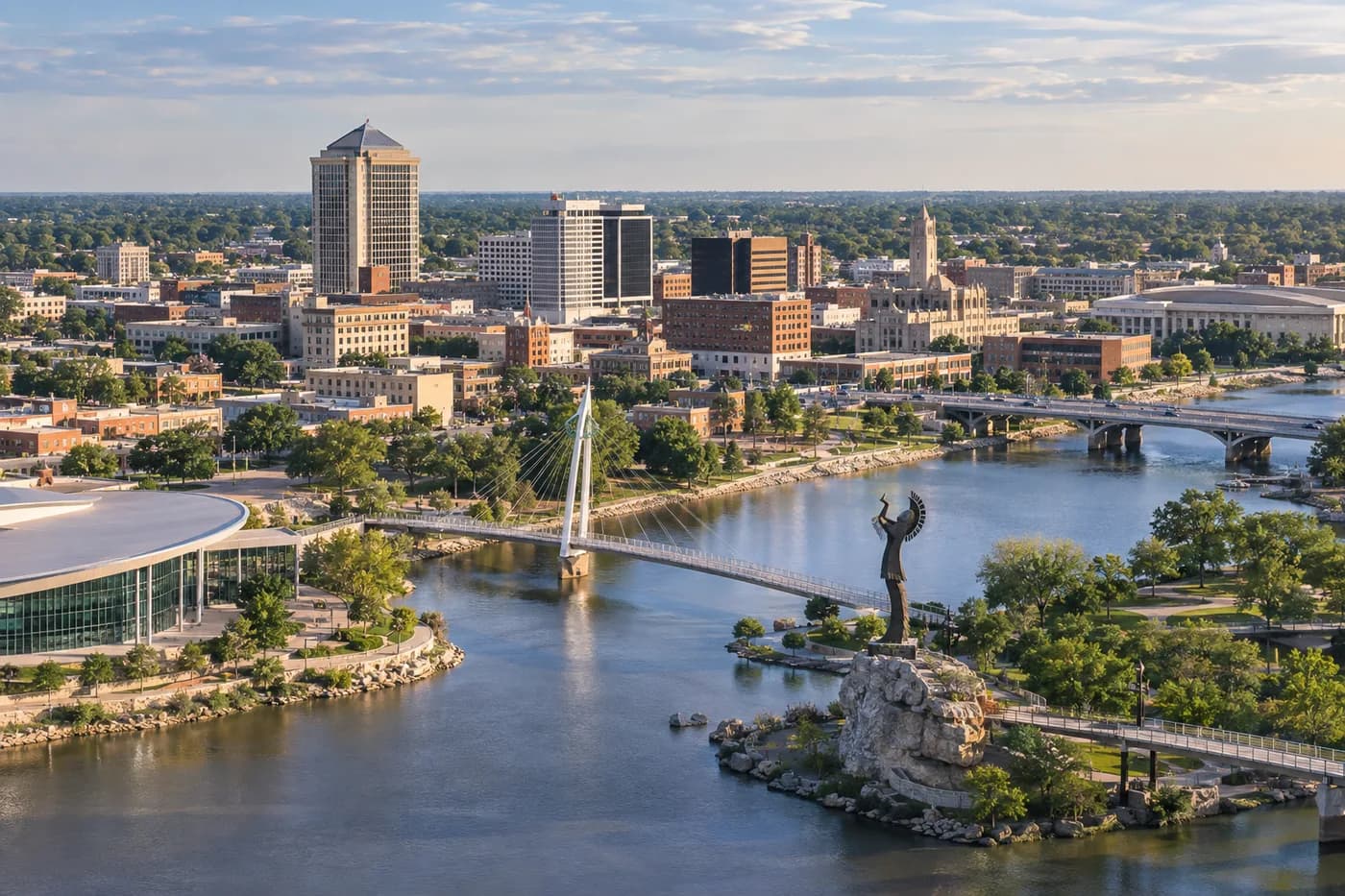
Around Kansas
Conditions vary across the state. Choose your city below, then describe what’s happening around your home or business.
Local snake information
Learn what to look for around your property, explore your city, and ask about an inspection or a quote.
Conditions vary across the state. Choose your city below, then describe what’s happening around your home or business.
Where you see snakes, how long it has been going on, and anything you’ve already tried are the most useful details to mention.
Ask about an inspection, what treatment would involve, and whether follow-up visits are included. You don’t need to identify the problem yourself before getting in touch.
Before you compare quotes, it helps to know which snakes actually live in Kansas, when they are busiest, and what the state figures look like. Everything below links to the agency or university page it came from.
These are the only Kansas snakes whose bite is medically significant; everything else in the state is harmless to people.
Sternberg Museum of Natural History, Fort Hays State UniversityOnly five Kansas herp species occur statewide, and none of them is venomous - diversity rises toward the south and east.
Sternberg Museum of Natural History, Fort Hays State UniversityKilling a snake because it is a snake is neither necessary nor legal cover - most Kansas species are harmless and control programs for them are unwarranted.
Kansas State University Research and ExtensionKansas has more venomous species than any other state in this group, and their ranges differ sharply across the state.
Sources: Sternberg Museum of Natural History, Fort Hays State University; Kansas State University Research and Extension; CDC/NIOSH. Figures are quoted as the source prints them. How we check our sources