The short version
Around Durham, NC, most snakes are harmless. Venomous snakes in North Carolina include copperheads, cottonmouths, timber rattlesnakes, eastern diamondback rattlesnakes, pygmy rattlesnakes, and eastern coral snakes. Across Durham, keep your distance, never try to kill or catch one, and seal the gaps, clear the cover, and control the mice that draw them in.
- Most snakes around Durham, NC are harmless and beneficial; only about 30 of roughly 150 U.S. species are venomous.
- Across Durham, in North Carolina, the venomous snakes to know are copperheads, cottonmouths, timber rattlesnakes, eastern diamondback rattlesnakes, pygmy rattlesnakes, and eastern coral snakes.
- Never try to kill or catch a snake around Durham, NC — most bites happen that way.
- Seal every gap larger than a quarter inch on a Durham, NC home.
- Clear cover and control mice around Durham, NC; snakes follow both.
For anyone in Durham, NC who has seen a snake on their property, found a shed skin, or keeps running into the same signs and wants to know what to do. If someone has already been bitten, call 911 first.
What to look for
Snakes don't move into a Durham, NC yard by accident. Around Durham, NC, they follow food (mice, rats, frogs), cover (woodpiles, tall grass, rocks), and a way in through any gap larger than a quarter inch. Snakes around Durham, NC are active most of the year, with the busiest stretches in spring and fall, and most you'll see are harmless — but a few are worth identifying before anyone gets close.
- 1Across Durham, NC, the clearest sign is seeing the same snake — or the same size and color — in the same spot more than once.
- 2A shed skin in your Durham garage, crawl space or garden bed is a sign a snake has been around.
- 3S-shaped drag marks in dust, sand, or loose soil around Durham show you a snake's travel route and often lead to the gap it uses.
- 4Mice, rats or frogs around a Durham home are the food snakes follow, and an open invitation.
- 5Around Durham, a musky smell in a crawl space or shed can mean a snake has been disturbed there, sometimes repeatedly.
- 6Rustling under floors or disturbed insulation in a Durham attic is worth checking, since rat snakes climb after mice.
Why it’s worth acting soon
- Waiting in Durham, NC means another day a venomous snake could bite — and most bites happen when someone tries to move or kill it.
- A snake that found a way into a Durham, NC home can find it again until the gap is sealed; the opening doesn't close itself.
- One snake in spring around Durham, NC can become a litter by summer, since several common species give birth to live young.
- The cover and food that drew a snake to a Durham, NC property keep drawing the next one until you change them.
📅
Snakes in Durham through the year
Spring
snakes come out to bask. Watch sunny walls and walks in Durham.
Summer
snakes hunt mice and frogs.
Fall
babies are born in late summer and early fall. Snakes also look for winter shelter.
Winter
lows near 30°F in Durham. Snakes stay underground.
Treatment options and typical costs
Identification and risk check
$100–$250
A pro confirms what you're dealing with in Durham, NC and walks the property to spot the gap it used and any rodent sign.
- Time
- 45–90 minutes
- Best for
- Any Durham, NC sighting where you couldn't tell what it was.
Safe removal and relocation
$150–$450
A licensed operator captures and relocates the snake where state law allows; in North Carolina several species are protected, so a good Durham pro knows which can be moved and where. Around Durham, calls peak in the warm months, March through November.
- Time
- 1–2 hours
- Best for
- A snake inside a Durham, NC home, garage, or crawl space now.
Exclusion and entry sealing
$300–$600+
Sealing every opening larger than a quarter inch in a Durham, NC home — door sweeps, vents, drains, and utility gaps — so the next snake has no way in.
- Time
- Half day to a full day
- Best for
- Repeat sightings or a snake found inside a Durham, NC home.
Habitat and prey reduction
$150–$400
Removing the woodpiles, brush, and rodent activity that make a Durham, NC yard attractive to snakes — the root fix in the humid subtropical climate.
- Time
- 2–4 hours, then ongoing
- Best for
- Durham, NC yards with cover, woodpiles, or mouse activity.
Prices are typical published ranges. Ask what’s included before you compare quotes.
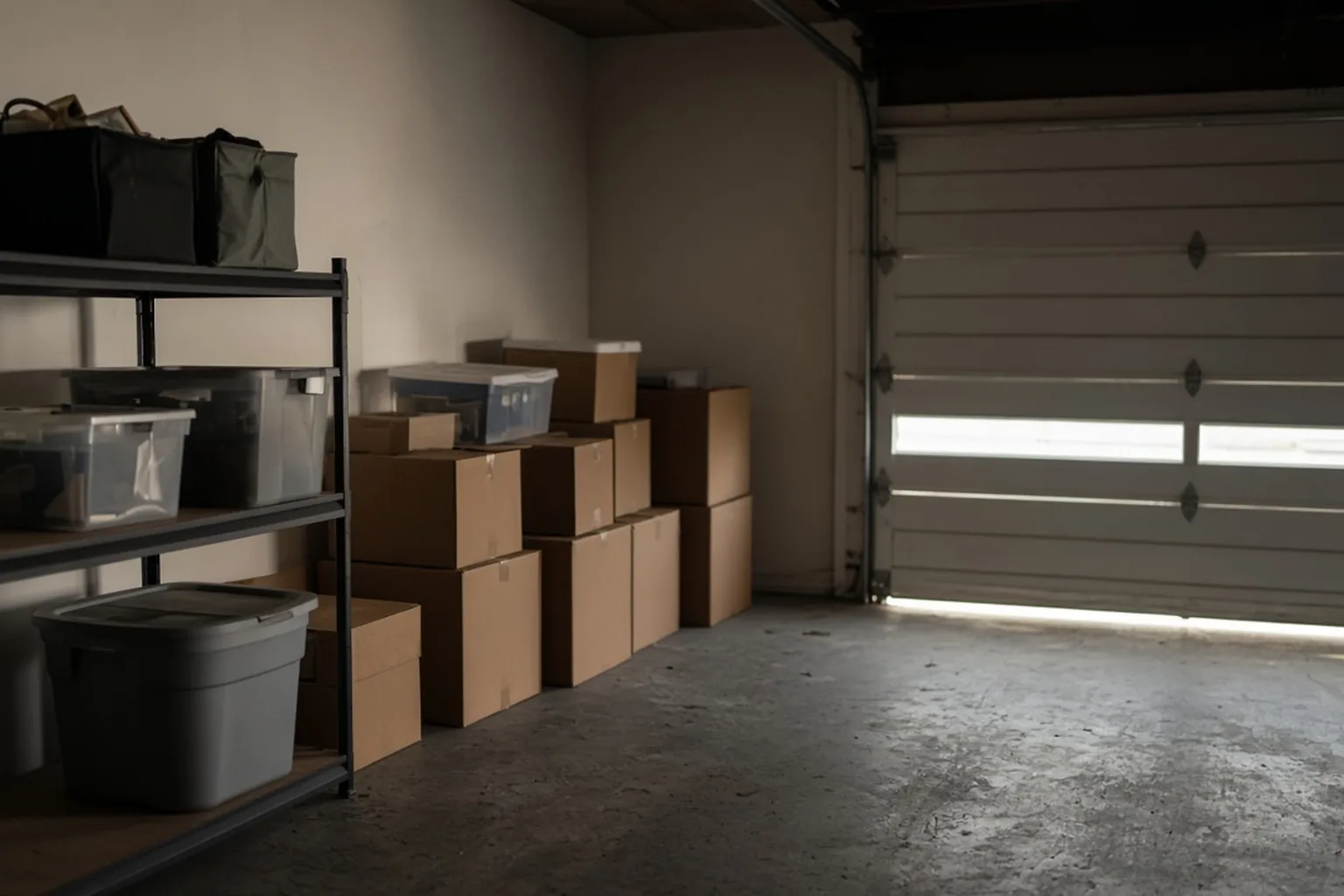 Light under the garage door means a gap a snake can use. A new seal fixes it.
How snake treatment works in Durham, NC.
- Snake treatment around Durham, NC is not a spray — there's no effective pesticide for snakes. Across Durham, it's three physical jobs: capture and relocate the snake, seal the openings it used, and remove the rodents and cover that attracted it. - Habitat: mowing, clearing cover, and controlling mice. Ask which of the three a pro's quote actually covers. - Exclusion: door sweeps, vent mesh, and sealing every gap over a quarter inch; in Durham the usual entry is a garage door gap or a crawlspace vent. - Removal: a hook and a lidded container, done by someone trained. Across Durham,
The snakes you're most likely to see in Durham.
Around Durham, the snakes you'll see most are rat snakes, garter snakes, black racers, and king snakes — harmless to people and useful, since they eat rodents. Across Durham, in North Carolina, the venomous species to know are copperheads, cottonmouths, timber rattlesnakes, eastern diamondback rattlesnakes, pygmy rattlesnakes, and eastern coral snakes, and a professional can tell the difference fast.
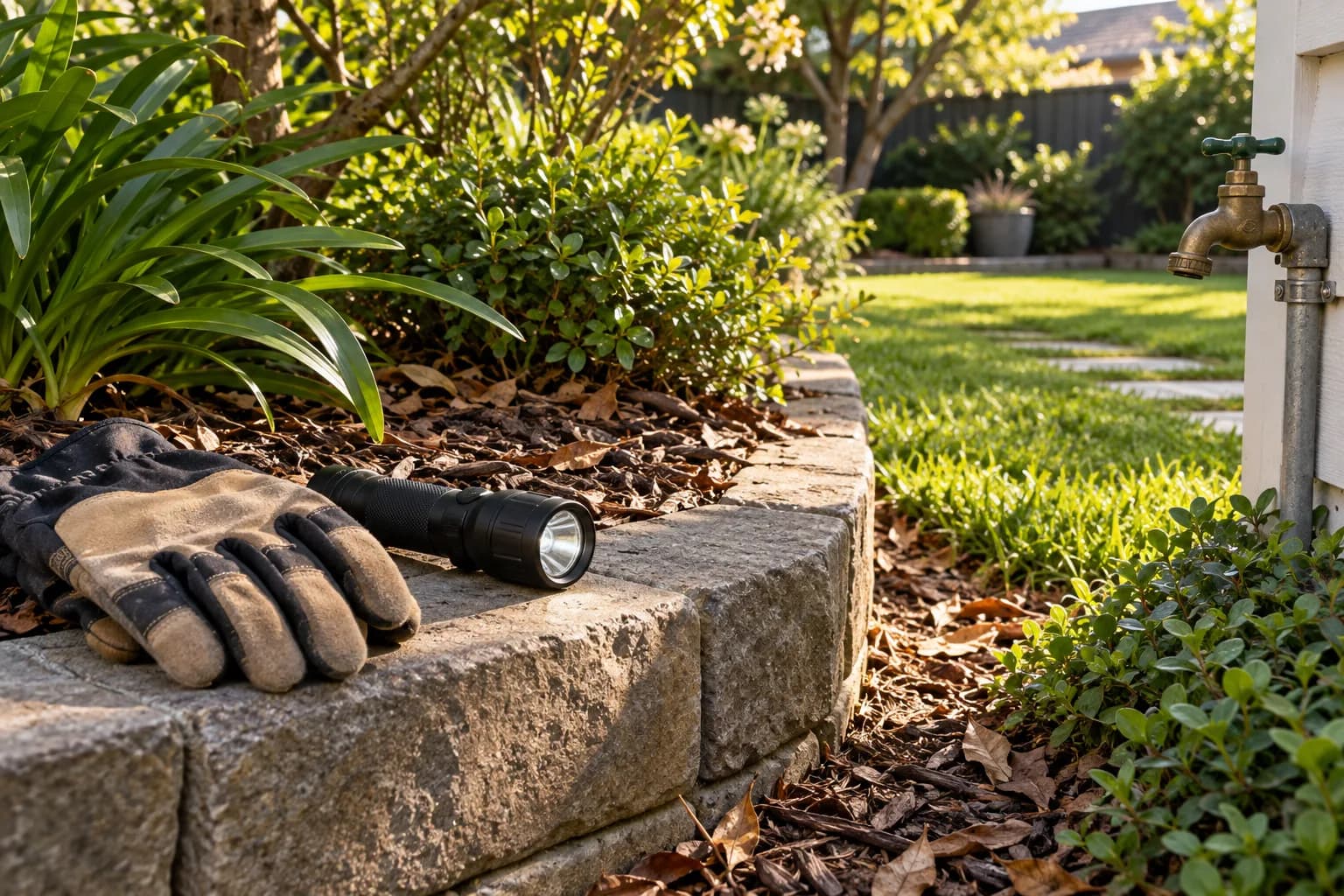 Keep mulch thin, fix dripping taps and clear clutter near the house.
When snakes are active around Durham.
Durham is with around 71% average humidity and summer highs near 89°F. Snakes around Durham, NC are active most of the year, with the busiest stretches in spring and fall — spring brings them out to bask, and fall is when they look for winter shelter.
Why snakes come to Durham homes.
Around Durham, snakes follow food, cover and an opening: mice and frogs, woodpiles and tall grass, and any gap over a quarter inch. Remove the food and cover and seal the gap around Durham, and the yard stops being worth a snake's visit. Snakes don't move into a Durham yard by accident.
The three jobs of snake control in Durham.
- Every snake problem around Durham comes down to three jobs, in order. - Remove the reason around Durham: cut the cover and food that made the property worth visiting. A removal quote usually covers only the first job — ask which of the three a pro covers before you sign in Durham. - Close the door on the Durham home: seal the gap it used, so the next one can't follow. - Get the animal out of the Durham property: capture and relocate it, safely and legally.
The quarter-inch rule for Durham homes.
Around Durham, fix each one the right way: door sweeps that meet the threshold, quarter-inch hardware cloth over vents and drains, and caulk or steel wool in foundation gaps. One thorough afternoon on a Durham home does more than a season of spraying anything. If a gap is wider than a quarter inch, a snake can use it — and around Durham, the usual suspects are the bottom of exterior doors, crawl-space vents, and gaps around pipes and wires.
What removal costs in Durham.
Across Durham, ask for a written quote that spells out visits and the warranty. Across Durham, the four things that move the number: whether it's venomous, where it is, whether sealing is included, and how many snakes there are.
If someone is bitten around Durham.
I
What affects the price
- Whether the snake in Durham, NC is venomous — safety protocol and insurance push that price up.
- Where in Durham, NC it is — an open yard is quick; inside a wall or attic is not.
- Whether entry points on a Durham, NC home need sealing on top of the removal.
- How many snakes are involved around Durham, NC, and whether there's evidence of breeding.
- Timing in Durham, NC — same-day and after-hours calls usually cost more.
- Whether rodent control is folded into the Durham, NC job.
📊
What worries you most about snakes?
When to call for help
Across Durham, NC, call when you can't identify the snake with confidence, when anything rattles or has a triangular head with vertical pupils, or when it's inside the house, garage, or crawl space. Across Durham, in North Carolina, the ones to know are copperheads, cottonmouths, timber rattlesnakes, eastern diamondback rattlesnakes, pygmy rattlesnakes, and eastern coral snakes. Around Durham, NC, call too when the same snake keeps appearing in one spot — that's a resident, not a visitor, and removal alone won't end it.
What you can do yourself
Plenty of snake work around Durham, NC is safely yours: mow the grass short near the house, move woodpiles and rocks off the foundation, seal gaps under doors, and deal with mice. Those steps cost almost nothing in Durham and matter more than any product on a shelf. What isn't yours is the snake itself in Durham. If you're certain a snake around Durham is harmless and out in the open, a broom and a lidded trash can will move a garter snake along. If you're not certain around Durham, NC, hire it out — a dead rattlesnake can still bite by reflex, so even the "handled it myself" version of this story is where the accidents happen.
Snakes in Durham
Across Durham, if you can't identify one with confidence, keep your distance and call a professional. Across Durham, the harmless snakes you'll see most are rat snakes, garter snakes, black racers, and king snakes. Across Durham, in North Carolina, the venomous species to know are copperheads, cottonmouths, timber rattlesnakes, eastern diamondback rattlesnakes, pygmy rattlesnakes, and eastern coral snakes. That shapes when snakes are out — around Durham, NC, they're active most of the year, with the busiest stretches in spring and fall. Durham is a city founded in 1869, with summer highs near 89°F.
Snake safety tips
Look from a distance, and don’t guess
Many harmless snakes look a lot like venomous ones. Around Durham, North Carolina, keep well back, take a zoomed-in photo, and compare it with your state wildlife agency’s guide.
If someone is bitten
Get medical help right away for any snakebite. Move away from the snake and don’t try to catch it. Don’t use a tourniquet, cut the wound, suck out venom or apply ice.
CDC: snakebite first aidBased on guidance from the CDC and university extension services.
How we check our sourcesLocal research
Snakes in Durham, NC: what the public record shows
Before you compare quotes, it helps to know which snakes actually live in North Carolina, when they are busiest around Durham, and what the state figures look like. Everything below links to the agency or university page it came from.
Snake species
Six venomous: coral snake, copperhead, cottonmouth, eastern diamondback, timber and pigmy rattlesnakes.
NC State ExtensionSnake species recorded in North Carolina
- Copperhead (Agkistrodon contortrix) — Statewide in Virginia and common in gardens and woodlots; the most common venomous species in the Mid-Atlantic. In Florida only the western Panhandle.
- Cottonmouth (water moccasin) (Agkistrodon piscivorus) — Throughout Florida; in Virginia only south and east of Petersburg in wet areas. Georgia lists both northern and Florida cottonmouths.
- Eastern diamondback rattlesnake (Crotalus adamanteus) — Throughout Florida; largest eastern venomous snake.
- Timber rattlesnake (Crotalus horridus) — State endangered in Virginia (canebrake population in the southeast); northern Florida only as far south as Gainesville.
When snakes are busiest around Durham
March-November. Southeast: copperhead and cottonmouth calls peak in warm months; coral snakes in sandy habitats.
Based on Durham’s humid subtropical climate profile.
Rules that apply in North Carolina
For context, nationally
- 7,000-8,000; about 5 deaths — Venomous snakebites per year in the U.S.. CDC/NIOSH
- 10-44 percent — Rattlesnake bite victims with lasting injury. CDC/NIOSH
Sources: NC State Extension; NC Wildlife Resources Commission; CDC/NIOSH; Nuisance wildlife: Snakes; Recognizing Florida's Venomous Snakes (WEC 202/UW229). Figures are quoted as the source prints them. How we check our sources
Simple ways to keep snakes away
- Around Durham, NC, seal every gap larger than a quarter inch in the foundation, siding, and roofline.
- Add door sweeps and screen vents to a Durham home, especially over the crawl space.
- Across Durham, NC, mow short near the house and clear brush, woodpiles, and rock piles that give snakes cover.
- Around Durham, keep firewood off the ground and away from the house so it can't become snake shelter.
- Across Durham, NC, control mice and rats — remove birdseed, pet food, and other attractants snakes follow.
- On a Durham property, trim shrubs up from the soil and tree branches back from the roof.
- Around Durham, NC, fix dripping taps and standing water, which draw the frogs and the snakes that eat them.
 Ask what kind of snake it is, where it'll be released and whether sealing is included.
Did you know?
Around Durham, NC, the snakes you're most likely to meet are rat snakes, and they're harmless.
A snake around Durham relies on scent far more than sight.
In North Carolina, several snake species are protected by law, so identification matters before anyone acts.
Questions people ask
Are there venomous snakes around Durham, NC?
Across Durham, in North Carolina, the venomous species to know are copperheads, cottonmouths, timber rattlesnakes, eastern diamondback rattlesnakes, pygmy rattlesnakes, and eastern coral snakes. Around Durham, NC most snakes you'll actually see are harmless, but if you can't identify one with confidence, treat it as venomous and keep your distance.
When are snakes active around Durham, NC?
Snakes around Durham, NC are active most of the year, with the busiest stretches in spring and fall. Spring brings them out to bask, and fall is when they look for winter shelter — which is when they turn up in Durham garages and crawl spaces.
What should I do if I find a snake in my Durham home?
Across Durham, don't try to catch or kill it — call a professional to remove it and ask where it got in. Close the door to the room in your Durham home if you can, and put a towel along the gap under it. Stay calm and keep children and pets away.
What should I do if someone is bitten?
I
Do snake repellents or mothballs work around Durham, NC?
Around Durham, NC, snake control is physical: capture the snake, seal the openings, and remove the rodents and cover that attracted it. Across Durham, there's no registered pesticide that kills or drives off a snake, and mothballs are both ineffective and toxic. No.
How much does snake removal cost in Durham, NC?
Across Durham, published benchmarks put a typical removal around $350 and relocation around $300, with venomous or attic removals around $500. For a Durham, NC property, those are planning numbers, not a quote — your price depends on the snake, the location, and the pro.
Is it legal to kill a snake on my Durham, NC property?
It depends on your state and the species. Several states protect certain snakes, and around Durham, NC relocation through a professional is the safer and usually legal route.
Why do I keep seeing snakes around Durham, NC even after removing one?
Because the thing that attracted it is still there. If the food, cover, and entry point on your Durham, NC property don't change, each removal just makes room for the next snake.
Nearby cities
Related guides
Sources (11)
The facts in this article come from the public sources listed above. Every home is different, so ask the company you talk to about pricing and what’s included. Published by Snake Exterminator · Updated October 13, 2026 · How we write these guides