The short version
Teach kids one rule — stop, back away, tell an adult — and keep play areas mowed and clear of cover. If a child is bitten, call 911 immediately and keep them calm and still.
- Teach one rule: stop, back away, tell an adult.
- Keep play areas mowed and clear of cover.
- Call 911 for any bite.
- Don't teach kids to identify snakes — teach them to leave.
For parents and caregivers who want a practical snake-safety plan for the kids.
What to look for
The danger isn't usually the snake lying in the yard — it's the child who bends down to look, or reaches under a board to see what's there. Most snakebites happen when people try to interact with the snake, and children are the most likely to do exactly that.
- 1A snake you've seen more than once in the same spot.
- 2Shed skins in the garage, crawl space, or garden — usually longer than the snake itself.
- 3Slither tracks: S-shaped drag marks in dust, sand, or loose soil.
- 4Mice, rats, or frogs around the house — the food snakes follow.
- 5Rustling under floors or in walls, or disturbed insulation in the attic.
- 6A musky smell in an enclosed space like a crawl space or shed.
Why it’s worth acting soon
- If it's venomous, every extra day is another chance for a bite — and most bites happen when someone tries to move or kill the snake.
- A snake that found its way in can find it again; the gap stays open until you close it.
- One snake in spring can become a litter in summer — several common species give birth to live young.
- The food and cover that drew the first snake keep drawing the next one.
7,000–8,000, about 5 deathsVenomous snakebites per year in the U.S.NIOSH About 1,000Rattlesnake bites reported per yearUC IPM $300Typical snake relocation (publisher estimate, Jan 2025)Fixr Treatment options and typical costs
Identification and risk check
$100–$250
A professional confirms what you're dealing with and walks the property to spot the gap it used and any rodent sign.
- Time
- 45–90 minutes
- Best for
- Any sighting, especially when you can't tell what it was.
Safe removal and relocation
$150–$450
A licensed operator captures the snake with hooks and a lidded container and releases it where local law allows.
- Time
- 1–2 hours
- Best for
- A snake inside the home, garage, or crawl space now.
Exclusion and entry sealing
$300–$600+
Sealing every opening larger than a quarter inch — door sweeps, foundation gaps, vents, drains, and utility penetrations.
- Time
- Half day to a full day
- Best for
- Repeat sightings, or a snake found inside.
Habitat and prey reduction
$150–$400
Removing the cover and food that draw snakes close: woodpiles off the ground, brush cleared, and the rodent problem handled.
- Time
- 2–4 hours, then ongoing
- Best for
- Yards with cover, woodpiles, or mouse activity.
Prices are typical published ranges. Ask what’s included before you compare quotes.
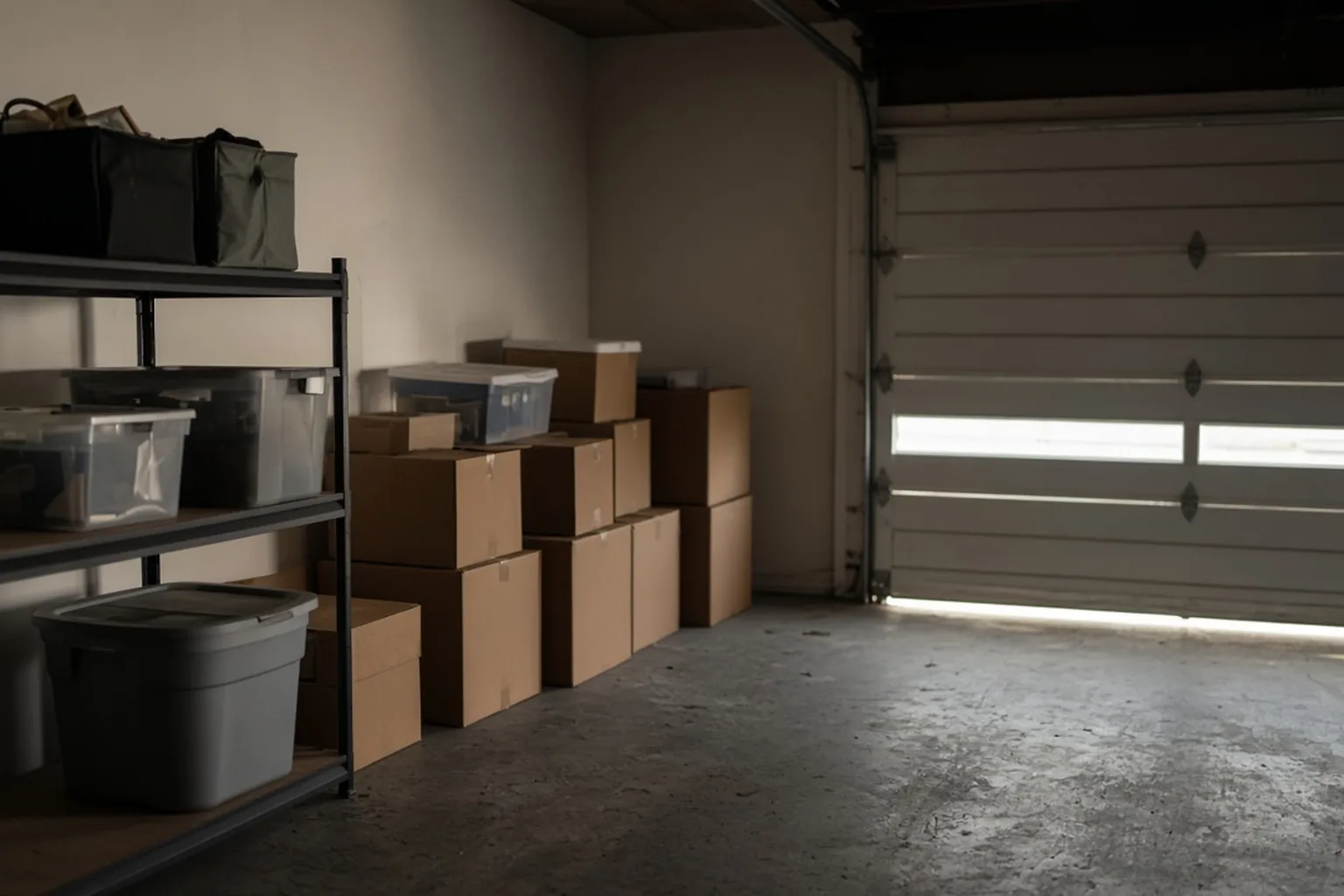 Light under the garage door means a gap a snake can use. A new seal fixes it.
The one rule to teach.
That's the whole lesson. Stop, back away, tell an adult. Keep play areas mowed and clear of boards, rocks, and stacked material. Don't teach kids to identify snakes themselves — teach them to leave the area and get help.
Snake-proof the play area.
Check sandboxes and toys left outside before kids use them. Mow short, clear brush and woodpiles, and keep the play area away from tall grass and rock walls. In high-risk regions, snake fencing around the play area can help.
 Leaf piles against the house are snake cover in fall. Rake them away from the foundation.
What to do if a child is bitten.
If you can safely photograph the snake from a distance, do — it helps with treatment. Don't use a tourniquet, cut the wound, suck out the venom, or apply ice. Keep the person calm and still, and remove rings or tight clothing. Move away from the snake and don't try to catch it. Get medical help right away for any snakebite.
Make it calm, not scary.
Frame it as a "look from far away" rule, the way you teach kids about cars or strangers. Kids who are calmly taught to back away and tell an adult are safer than kids who are told snakes are monsters to be fought.
What affects the price
- Whether it's venomous — safety protocol and insurance push the price up.
- Where it is — an open yard is quick; inside a wall or attic is not.
- Whether entry points need sealing on top of removal.
- How many snakes, and whether there's evidence of breeding.
- Timing — same-day and after-hours calls usually cost more.
- Whether rodent control is folded into the job.
📊
What's your biggest concern about snakes on your property?
When to call for help
Call when you can't identify the snake with confidence, when anything rattles or has a triangular head with vertical pupils, or when the snake is inside the house, garage, or crawl space.
What you can do yourself
If you're not certain what it is — or it's inside, or it rattles — hire it out. A dead rattlesnake can still bite by reflex. Plenty of snake work is safely yours: mow short, clear cover, seal gaps, and control mice. What isn't yours is the snake itself.
Where you live matters
In Families With Children, that usually means sealing the gaps and moisture issues the inspection turned up, adjusting what is stored near the structure, and staying on top of the small warning signs before they become a bigger job. Prevention is the part that keeps the problem from coming back. In Families With Children, most problems do not disappear after a single visit if the conditions that caused them are still present, so the plan should spell out what changes afterward and how you will know it worked. In Families With Children, after treatment, ask what to watch for and when a follow-up visit would make sense. In Families With Children, if you have photos or a rough timeline of when the problem started, share them, because those details help the provider confirm what is going on and give you a more accurate scope and price. In Families With Children, a little preparation usually makes the visit more useful: clear access to the areas where you have seen activity, put away loose items, and note anything you have noticed recently. In Families With Children, getting the scope, the prep steps, and any follow-up terms in writing makes it much easier to compare providers fairly, and a good provider will walk you through each of these without pressure. In Families With Children, before you book, ask whether the inspection is included, what the treatment plan covers, how many visits to expect, and what the written quote includes. A local provider who knows Families With Children can point out the specific things that matter most here before you commit to a plan. In Families With Children, checking the usual entry points, moisture spots, and sheltered areas near the structure usually turns up the conditions that are letting them in. The most useful first step in Families With Children is to note where you have seen snakes activity and when it appears, so an inspection is faster and the quote more accurate. Learn the short venomous list for your state and treat anything you can't identify as venomous. Snake species and activity vary by region. In Families With Children, seeing where the activity is and asking questions in person usually leads to a better plan than a quote over the phone. In Families With Children, schedule the inspection when you have time to walk the property with the provider. In Families With Children, providers that are clear about these up front are usually the easiest to work with. In Families With Children, ask for everything in writing before you commit: the scope, the price, the preparation steps, and what happens if the problem returns. In Families With Children, droppings and urine build up under a long-standing roost, and cleaning them disturbs dust that can carry spores, so cleanup should be done with the right protection and often as a separate scope from the exclusion work itself. In Families With Children, it has to be timed outside the maternity season so young bats are not stranded inside, which is why it is usually a professional job rather than a do-it-yourself one. In Families With Children, exclusion is the durable fix: one-way devices let the bats leave but not return, and then every remaining gap is sealed. In Families With Children, a bat found in a room where someone was sleeping, or one that may have touched a child or pet, is treated as a possible exposure, so contact public health or a doctor before releasing it. In Families With Children, if you have seen a bat indoors, keep the room closed and do not handle it bare-handed. In Families With Children, a short watch at dusk is often the clearest way to confirm where they are getting in and out. In Families With Children, bats squeeze through gaps as small as three-eighths of an inch, so an inspection looks closely at ridge vents, gable vents, soffits, and the joints where the roof meets the wall. Most bat work is about the roofline and the attic.
Snake safety tips
Look from a distance, and don’t guess
Many harmless snakes look a lot like venomous ones. Around your home, keep well back, take a zoomed-in photo, and compare it with your state wildlife agency’s guide.
If someone is bitten
Get medical help right away for any snakebite. Move away from the snake and don’t try to catch it. Don’t use a tourniquet, cut the wound, suck out venom or apply ice.
CDC: snakebite first aidBased on guidance from the CDC and university extension services.
How we check our sourcesSimple ways to keep snakes away
- Seal every gap larger than a quarter inch in the foundation, siding, and roofline.
- Add door sweeps and screen vents, especially on crawl spaces.
- Mow short near the house and clear brush, woodpiles, and rock piles.
- Store firewood off the ground and away from the house.
- Control mice and rats — remove birdseed, pet food, and other attractants.
- Trim shrubs up from the soil and tree branches back from the roof.
- Fix dripping taps and standing water, which draw frogs and the snakes that eat them.
 Ask what kind of snake it is, where it'll be released and whether sealing is included.
Did you know?
Snakes smell with their tongues, transferring scent to the Jacobson's organ in the roof of their mouth.
A rattlesnake's heat-sensing pits can detect temperature changes as small as 0.003°C.
A dead rattlesnake can still bite by reflex for up to an hour.
Questions people ask
What should I teach my child about snakes?
One rule: stop, back away, and tell an adult. Don't try to identify or catch it.
How do I make the backyard safer for kids?
Mow short, clear woodpiles and brush, keep play areas away from tall grass, and check toys before use.
Are baby snakes more dangerous?
That's a myth. Treat any unidentifiable snake with the same caution.
What if my child is bitten?
Call 911 and get medical help right away. Keep the child calm and still, and don't try to catch the snake — a photo from a distance is enough.
Sources (10)
The facts in this article come from the public sources listed above. Every home is different, so ask the company you talk to about pricing and what’s included. Published by Snake Exterminator · Updated October 13, 2026 · How we write these guides