The short version
A snake inspection looks for four things: the snake, the gap it used, the cover it hides under, and the food it's following. Expect a property walk that ends with a list of entry points to seal and any rodent issues to address.
- An inspection covers the snake, the gap, the cover, and the food.
- Any gap wider than a quarter inch is a potential entry.
- Ask the inspector to point out each finding, not just the snake.
- Signs matter in combination, not in isolation.
For anyone who has seen a snake, found signs of one, or wants a professional to explain where snakes are getting in.
What to look for
Most people call about the snake they saw, but the useful part of an inspection is what the snake points to: a gap under the garage door, mice in the crawl space, a woodpile against the siding. Finding the animal is job one; finding the reason is what keeps it from happening again.
- 1A snake you've seen more than once in the same spot.
- 2Shed skins in the garage, crawl space, or garden — usually longer than the snake itself.
- 3Slither tracks: S-shaped drag marks in dust, sand, or loose soil.
- 4Mice, rats, or frogs around the house — the food snakes follow.
- 5Rustling under floors or in walls, or disturbed insulation in the attic.
- 6A musky smell in an enclosed space like a crawl space or shed.
Why it’s worth acting soon
- If it's venomous, every extra day is another chance for a bite — and most bites happen when someone tries to move or kill the snake.
- A snake that found its way in can find it again; the gap stays open until you close it.
- One snake in spring can become a litter in summer — several common species give birth to live young.
- The food and cover that drew the first snake keep drawing the next one.
7,000–8,000, about 5 deathsVenomous snakebites per year in the U.S.NIOSH About 1,000Rattlesnake bites reported per yearUC IPM $300Typical snake relocation (publisher estimate, Jan 2025)Fixr Treatment options and typical costs
Identification and risk check
$100–$250
A professional confirms what you're dealing with and walks the property to spot the gap it used and any rodent sign.
- Time
- 45–90 minutes
- Best for
- Any sighting, especially when you can't tell what it was.
Safe removal and relocation
$150–$450
A licensed operator captures the snake with hooks and a lidded container and releases it where local law allows.
- Time
- 1–2 hours
- Best for
- A snake inside the home, garage, or crawl space now.
Exclusion and entry sealing
$300–$600+
Sealing every opening larger than a quarter inch — door sweeps, foundation gaps, vents, drains, and utility penetrations.
- Time
- Half day to a full day
- Best for
- Repeat sightings, or a snake found inside.
Habitat and prey reduction
$150–$400
Removing the cover and food that draw snakes close: woodpiles off the ground, brush cleared, and the rodent problem handled.
- Time
- 2–4 hours, then ongoing
- Best for
- Yards with cover, woodpiles, or mouse activity.
Prices are typical published ranges. Ask what’s included before you compare quotes.
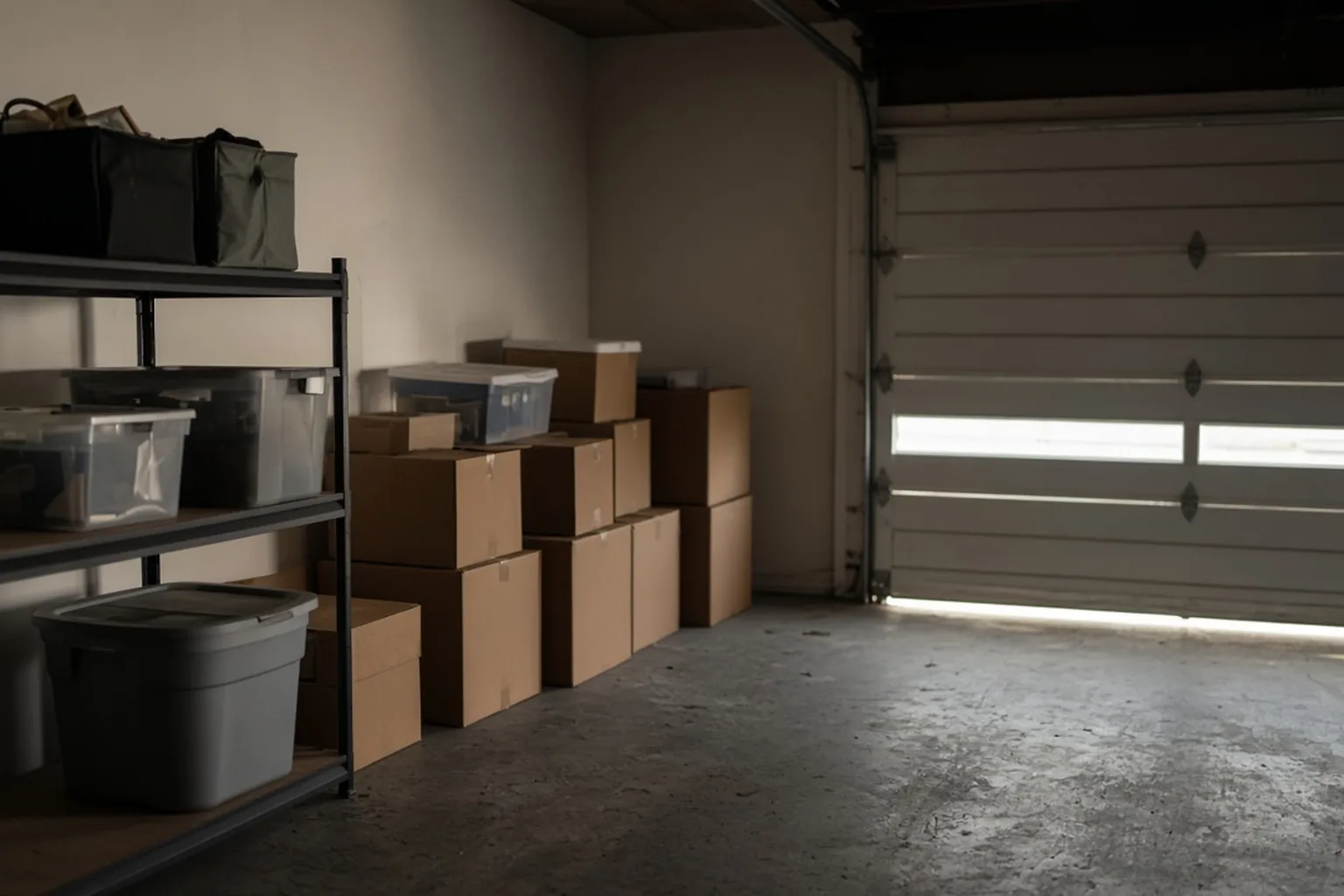 Light under the garage door means a gap a snake can use. A new seal fixes it.
What an inspector is looking for.
- A thorough inspection covers four things. - Food: rodent droppings, burrows, and bird feeders. Ask the inspector to point out each one, not just the snake. - Cover: woodpiles, rock piles, brush, tarps, and tall grass near the house. - Entry points: gaps under doors, foundation cracks, unscreened vents, and utility penetrations. - The snake itself, and where it went.
The quarter-inch standard.
Any gap wider than a quarter inch is a potential entry. An inspector checks door sweeps, garage seals, crawl-space vents, drains, and where pipes and wires enter the wall, then lists what needs sealing.
 Leaf piles against the house are snake cover in fall. Rake them away from the foundation.
Reading the signs.
Slither tracks in dust lead to the gap it uses. A shed skin means a snake spent time there. Signs only matter in combination — one skin might be a one-time visit; a skin, tracks, and repeat sightings is a resident. A drop in mice can mean a snake moved in to do the work.
Questions to ask during the inspection.
Is sealing included in the quote? Where did it get in? What kind of snake was it? Write the answers down — they're how you compare pros. What should I do differently with my yard? Are there rodents I should address?
What an inspector checks first.
A snake inspection follows the entry points, in order of likelihood: the bottom of exterior doors and the garage door, crawl-space vents and access doors, gaps around pipes and wires where they enter the wall, and cracks in the foundation. These are where snakes actually get in.
Signs to point out.
A shed skin, slither tracks in dust, or the spot you keep seeing a snake is evidence the inspector uses. Bring what you've seen to the walk-through. Point out rodent sign too — droppings or chewed bags in the garage — because that's usually the reason the snake is there.
Reading the inspection report.
That report is your to-do list, and it's also how you compare a second inspector's findings. A useful inspection ends in writing: which gaps were found and where, what cover needs clearing, and what to seal first. If a pro walks the yard and leaves you nothing on paper, ask for it.
Seasonal timing of inspections.
Inspecting then gives you a clear picture of the entry points before they're used. The best time to inspect is when snakes are active and findable — early spring as they emerge, and late summer before the den search. A fall inspection timed to the den search catches the gap a snake would otherwise find first.
A DIY pre-inspection walk.
Note anything you find and hand it to the inspector. Before the inspector arrives, do your own five-minute walk: check the bottom of every exterior door, the garage seal, crawl-space vents, and gaps around pipes and wires. You'll get more from the visit, and you'll know which gaps matter most when they're pointed out.
When to get a second opinion.
A second inspector who maps the gaps differently is the signal that the first one rushed. If a pro's findings don't match what you've seen — they claim no entry points while you keep finding snakes in the garage — get a second walk-through. Snake problems are physical, and two careful sets of eyes beat one hurried one.
What affects the price
- Whether it's venomous — safety protocol and insurance push the price up.
- Where it is — an open yard is quick; inside a wall or attic is not.
- Whether entry points need sealing on top of removal.
- How many snakes, and whether there's evidence of breeding.
- Timing — same-day and after-hours calls usually cost more.
- Whether rodent control is folded into the job.
📊
What is your main concern about snakes on your property?
When to call for help
Call when you can't identify the snake with confidence, when anything rattles or has a triangular head with vertical pupils, or when the snake is inside the house, garage, or crawl space.
What you can do yourself
Plenty of snake work is safely yours: mow short, clear cover, seal gaps, and control mice. What isn't yours is the snake itself. If you're not certain what it is — or it's inside, or it rattles — hire it out. A dead rattlesnake can still bite by reflex.
Where you live matters
In Snake Inspection, getting the scope, the prep steps, and any follow-up terms in writing makes it much easier to compare providers fairly, and a good provider will walk you through each of these without pressure. Snake species and activity vary by region. Learn the short venomous list for your state and treat anything you can't identify as venomous. The most useful first step in Snake Inspection is to note where you have seen snakes activity and when it appears, so an inspection is faster and the quote more accurate. In Snake Inspection, checking the usual entry points, moisture spots, and sheltered areas near the structure usually turns up the conditions that are letting them in. A local provider who knows Snake Inspection can point out the specific things that matter most here before you commit to a plan. In Snake Inspection, before you book, ask whether the inspection is included, what the treatment plan covers, how many visits to expect, and what the written quote includes.
Snake safety tips
Look from a distance, and don’t guess
Many harmless snakes look a lot like venomous ones. Around your home, keep well back, take a zoomed-in photo, and compare it with your state wildlife agency’s guide.
If someone is bitten
Get medical help right away for any snakebite. Move away from the snake and don’t try to catch it. Don’t use a tourniquet, cut the wound, suck out venom or apply ice.
CDC: snakebite first aidBased on guidance from the CDC and university extension services.
How we check our sourcesSimple ways to keep snakes away
- Seal every gap larger than a quarter inch in the foundation, siding, and roofline.
- Add door sweeps and screen vents, especially on crawl spaces.
- Mow short near the house and clear brush, woodpiles, and rock piles.
- Store firewood off the ground and away from the house.
- Control mice and rats — remove birdseed, pet food, and other attractants.
- Trim shrubs up from the soil and tree branches back from the roof.
- Fix dripping taps and standing water, which draw frogs and the snakes that eat them.
 Fine metal mesh over vents and gaps keeps snakes out. Foam alone won't.
Did you know?
Snakes smell with their tongues, transferring scent to the Jacobson's organ in the roof of their mouth.
A rattlesnake's heat-sensing pits can detect temperature changes as small as 0.003°C.
A dead rattlesnake can still bite by reflex for up to an hour.
Questions people ask
How long does a snake inspection take?
A typical property walk runs 45 to 90 minutes, longer if there are outbuildings, crawl spaces, or a lot of cover to check.
Is an inspection free?
It varies by pro. Ask whether the inspection is charged and whether the fee is credited toward work you book.
What should I do before the inspector arrives?
Take photos of anything you've seen, note when and where, and clear obvious access to crawl spaces, garages, and the foundation so they can inspect.
Will an inspection find the snake if it's hiding?
If it's hidden in a wall, the inspector may recommend monitoring or a return visit. The gap it used is usually findable even when the snake isn't. Not always on the first visit.
Should I walk the property with the inspector?
Yes — you'll hear what each gap and piece of cover means, and you'll know exactly what to seal and where. A good inspector explains as they go.
Is an inspection free?
Some credit the inspection fee toward work you book; others charge it separately. Ask before the visit so there's no surprise. It varies by pro.
Sources (10)
The facts in this article come from the public sources listed above. Every home is different, so ask the company you talk to about pricing and what’s included. Published by Snake Exterminator · Updated October 13, 2026 · How we write these guides